

Amped Plumbing Blog · Drain and Sewer
How to Use a Plunger the Right Way
Pick the right plunger
Flange plunger (toilet plunger). It has an extra rubber sleeve that folds out from the bottom of the cup. The sleeve fits into the toilet drain opening and seals it. This is the one to use on a toilet.
Cup plunger (sink plunger). The flat-bottomed red or black cup most people picture. It seals against a flat surface, so it works on sinks, tubs and showers, but it seals poorly on a toilet.
Keep one of each. Using a toilet plunger in a kitchen sink is not something you want to do.
How to plunge a toilet
- Stop the water first. If the bowl is close to overflowing, lift the tank lid and push the flapper down, or turn the shutoff valve behind the toilet clockwise.
- Check the water level. You need enough water in the bowl to cover the rubber cup. Add some from a bucket if it is low.
- Seat the plunger. Fold the flange out, lower the plunger in at an angle so it fills with water, and fit it over the drain opening.
- First push is gentle. Press down slowly to push the air out. A hard first push just sprays water.
- Pump 15 to 20 times. Push and pull firmly, keeping the seal. The pull does as much work as the push.
- Break the seal on the last pull. If the water drains away, flush once to check.
If it does not clear after two or three rounds, stop. More force will not help and can push the clog deeper.
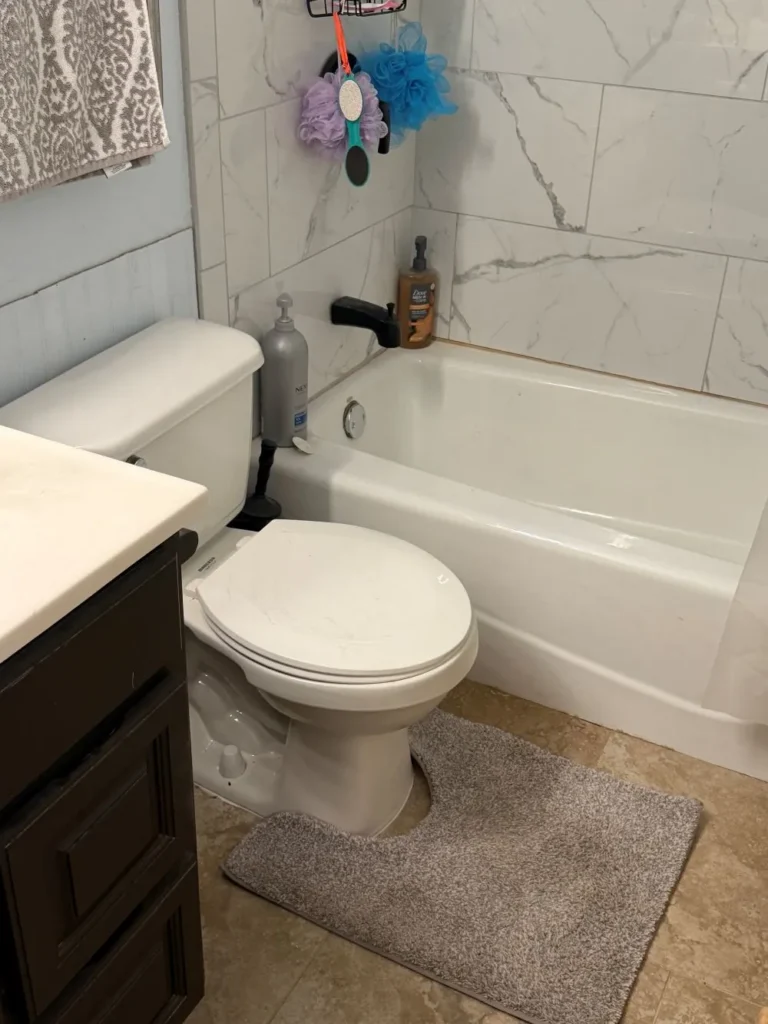
How to plunge a sink, tub or shower
- Remove the stopper or strainer.
- Block the overflow. Hold a wet rag tightly over the overflow hole in a bathroom sink or tub. On a double kitchen sink, plug the other side. Without this, the pressure escapes and nothing moves.
- Run enough water to cover the cup.
- Seal the cup plunger over the drain and pump firmly 15 to 20 times.
- Pull it off and see whether the water drains.
Mistakes to avoid
- Plunging after pouring in chemical drain cleaner. It can splash back on your skin and eyes.
- Flushing again and again. Each flush adds water to a bowl that is not draining.
- Plunging with too little water. Air compresses; water does not. The water is what moves the clog.
- Using the wrong plunger. A flat cup on a toilet rarely seals.
When a plunger will not fix it
A plunger clears clogs that are close to the fixture. It will not fix a blockage in the main sewer line. Call a plumber when:
- The same drain clogs again within days.
- More than one fixture is slow or backing up.
- Water comes up in the tub or shower when you flush.
- You hear gurgling from other drains.
Those are signs of a deeper clog that needs professional drain cleaning. If the toilet itself keeps clogging and the drain is clear, the problem may be the toilet; see toilet repair and replacement.
If the clog keeps coming back or more than one drain is backing up, the blockage is past where a plunger can reach.
Common questions
Does a plunger push or pull the clog?
Both. The push sends pressure down the pipe and the pull creates suction that loosens the clog. Working it back and forth is what breaks a clog free, so keep the seal on both strokes.
How many times should I plunge?
About 15 to 20 firm strokes per round, and no more than two or three rounds. If the drain has not cleared by then, the clog is too deep or too solid for a plunger.
Can plunging damage my pipes or toilet?
Normal plunging will not. Very hard, violent strokes can loosen the wax seal under a toilet or strain old drain fittings under a sink, so use firm, steady pressure rather than force.
Amped Plumbing is a licensed plumbing company (OK Plumbing Contractor License #049194, held by Mickey Lyons) based in Warr Acres and serving the Oklahoma City metro, including Edmond, Moore, Yukon, Norman, Bethany and Nichols Hills.