


How to Check for a Hidden Water Leak at Home
Wondering how to check for a hidden water leak? Start by pausing household water use, recording your water meter, and comparing the reading after a period with no planned water use. Then check toilets, accessible plumbing, and outdoor fixtures. A moving meter means water passed through it, but it does not identify the source or confirm a leak beneath the slab.
If you are in Oklahoma City and have noticed unexplained water use, a damp spot, or the sound of running water, these checks can help you decide what to do next. If water is actively spreading through your home, arrange help immediately rather than waiting to finish a test.
Start with your water use and recent changes
If your bill brought the concern to your attention, compare the amount of water used, not just the total charge. Check the billing period and whether watering, guests, a pool fill, or another activity changed your normal use. Ask your utility about an unclear reading or billing change.
Also note when each symptom appears. A cabinet that becomes damp only after the sink drains needs a different investigation from a meter that keeps recording water overnight. The timing can help a plumber narrow down whether the concern may involve a drain, a pressurized supply line, or water-using equipment.
How to do a no-water-use meter check
The EPA’s WaterSense leak guidance recommends comparing meter readings before and after a two-hour period when no water is being used.
- Choose a time when everyone can avoid faucets, showers, toilets, and water-using appliances. Pause scheduled irrigation and account for equipment that may run automatically, such as an ice maker or a water softener regeneration cycle.
- If your meter is safely accessible, record its reading or take a clear photo. Do not enter an unsafe meter box or operate utility equipment.
- Avoid planned water use for the test period. Check whether any automatic equipment ran unexpectedly.
- Record the meter again and compare the readings. If water passed through the meter without an explained use, investigate further.
If you cannot access or read the meter safely, contact your utility or a plumber. For homes with a private well, this meter-based method may not apply; a professional can recommend a different check.
What meter movement means
A moving meter can point to several possibilities, including a leaking toilet, dripping fixture, irrigation problem, water-using equipment, or supply pipe leak. Shared meters and automatic systems can complicate the result. Use the reading as a clue, not as a diagnosis or a basis for deciding where a wall should be opened or excavation should begin.
A stable reading does not rule out every leak. A drain pipe can leak only when a fixture is used, and an intermittent problem may not occur during your test.
Check toilets before assuming the leak is underground
A toilet can lose water from its tank into the bowl without leaving a puddle on the floor. Listen for refilling when nobody has flushed, and look for water continuing to move in the bowl after the refill cycle should have finished.
For a standard tank toilet, the Nevada Irrigation District’s leak checklist describes adding a few drops of food coloring to the tank and checking the bowl after ten minutes without flushing. Color appearing in the bowl indicates leakage from the tank. Flush after the test to reduce staining. Follow the manufacturer’s instructions if your toilet has a special tank or cleaning system.
Finding a toilet leak gives you a specific problem to address. It does not establish that the toilet is the only source of unexplained water use, so reassess after the repair.
Look for moisture in accessible areas
Inspect under sinks, around toilet bases, near visible supply connections, and around appliances. Check outdoor hose connections and look for unusually wet areas near irrigation components. Observe what is visible without moving heavy appliances or opening walls.
| Clue | Possible explanation | What to record |
|---|---|---|
| Cabinet becomes wet after sink use | Drain connection, supply connection, or water spilling around the fixture | Whether moisture follows filling, draining, or both |
| Toilet refills without flushing | Water may be escaping from the tank into the bowl | Frequency and results of a dye test |
| Meter records unexplained use | A fixture, automatic system, or supply leak may be involved | Readings, test times, and equipment that ran |
| Floor or wall stays damp | Plumbing, condensation, or water entering from elsewhere | Location and whether weather or fixture use changes it |
| Outdoor area stays wet | Irrigation, a buried supply line, drainage, or another source | Weather, watering schedule, and how long it persists |
Water can travel before becoming visible. The wettest surface is not always directly beside the source.
What professional leak detection adds
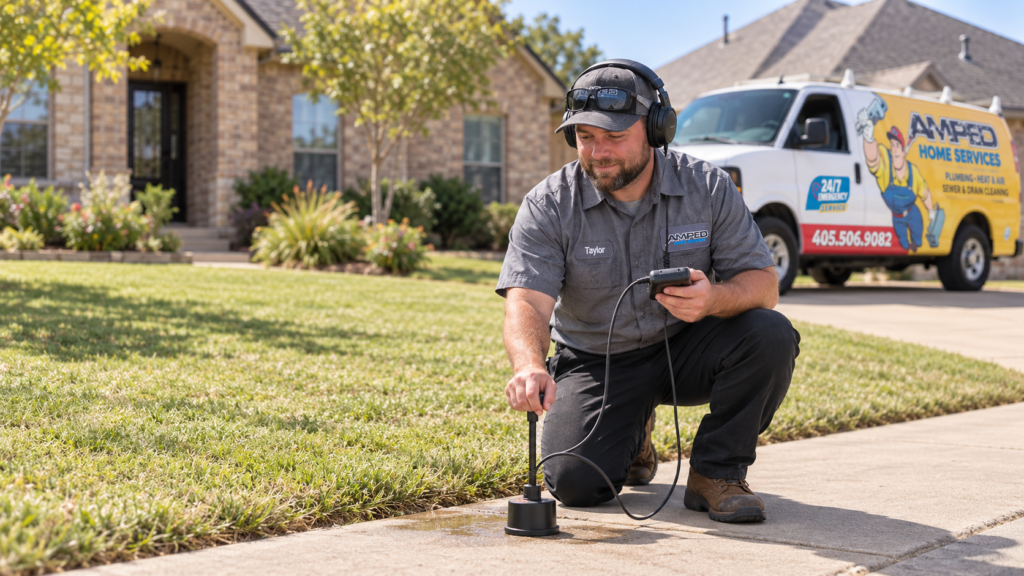
Professional leak detection combines the symptoms you notice with checks of the plumbing system. Depending on the situation, a plumber may use pressure testing, listening equipment, moisture measurements, or thermal imaging to narrow the search. The tools should suit the pipe and the suspected location. Explore Amped’s leak detection service.
Thermal imaging shows temperature differences at surfaces. It does not see through walls or directly confirm water. FLIR’s explanation of thermal leak detection stresses that temperature patterns should be checked with other evidence, such as moisture measurements.
Locating a suspected leak and choosing the repair are separate steps. An isolated accessible leak may need a focused repair. Evidence pointing below the foundation may lead to slab leak location and repair. A history of failures in several supply lines can raise a broader repiping question. Learn about slab leak location and repair.
When to stop checking and call for help
Call for help promptly if water is spreading, a damp area persists, or you hear running water you cannot explain. For an active supply leak, you may be able to limit further water flow by turning off the home’s main shutoff if you know where it is and can operate it safely. Do not force a stuck valve or operate the utility’s meter valve without authorization.
Stay away from water near electrical equipment. If you need help shutting off the supply, call your utility or an emergency plumber. Keep photos and test results, but do not delay addressing active damage to collect more information.
Frequently asked questions
A meter reading or damp spot can offer a clue, but it rarely identifies the source on its own. Here are answers to common questions about home leak checks and when to bring in a professional.
Can I have a hidden leak without a high water bill?
Yes. A small or intermittent leak may not produce an obvious billing change. A drain leak may release water already counted by the meter without increasing the amount the home uses.
Does a moving water meter mean I have a slab leak?
No. It shows water passing through the meter. Toilets, irrigation, automatic equipment, and leaks in several possible locations must be considered before identifying a slab leak.
Can a leak detector find every leak without opening a wall?
No method guarantees that. Diagnostic tools can narrow the search, but pipe access, building materials, and the type of leak may make a controlled opening necessary for confirmation or repair.
What should I have ready for a leak detection appointment?
Share meter readings, water-use history, photos of moisture, the times symptoms occur, and any recent plumbing repairs. Tell the plumber about irrigation and equipment that automatically uses water.
Schedule leak detection in the Oklahoma City metro
Still unsure where the water is coming from? Amped Home Services helps homeowners in Oklahoma City and surrounding communities investigate hidden plumbing leaks and unexplained moisture. Share what you noticed, whether your meter reading changed, and when the symptoms occur so the team can help you determine the appropriate next step.